


Bowmanville Bathroom Renovation: 3–6 Weeks Active, 6–12 Weeks Total
Request Your Free Estimate Today
GET A FREE ESTIMATE →A full bathroom renovation typically takes three to six weeks of active construction, but the total elapsed time from your first design decision to final inspection usually runs six to twelve weeks. Active construction is the hands-on work happening in your home. Total elapsed time includes design, ordering, permits, and every inspection wait in between. Move a drain or knock out a wall, and both numbers stretch considerably.
TL;DR:
- Longer timelines often result from custom material lead times, hidden damage discovered during demolition, or structural changes like moving drains or altering wiring.
- Permits and inspection wait times significantly extend project duration, especially in older homes or when plumbing and electrical work are involved.
- Proper planning, including finalizing all material selections and obtaining a detailed schedule before demolition, can prevent major delays caused by ordering issues or permit processing.
- Coordinating trades through a contractor with established relationships can compress timelines by reducing idle time during curing or inspection periods.
- Most delays stem from poor planning rather than unforeseen issues, so a clear, written schedule with specific inspection and cure dates is vital for staying on track.
Table of Contents
- How long does a full bathroom renovation take in Bowmanville?
- What happens in each phase of a bathroom renovation?
- What factors push a renovation toward a longer timeline?
- What should homeowners do before demolition starts?
- How do permits and inspections affect the schedule?
- Why local trade coordination shortens the calendar
- A contractor’s honest take on bathroom renovation timelines
- Get a written timeline for your Bowmanville bathroom
- Sources
How long does a full bathroom renovation take in Bowmanville?
The answer depends heavily on scope, and the gap between a cosmetic refresh and a layout overhaul is bigger than most homeowners expect.
| Project type | Active construction | Total elapsed time |
|---|---|---|
| Cosmetic refresh (paint, fixtures, no tile) | 3 days | 1–2 weeks |
| Small bathroom, like-for-like | 2–3 weeks | 4 weeks |
| Full remodel, like-for-like layout | 3–6 weeks | 6–12 weeks |
| Layout or plumbing changes | 5–7 weeks | 3–4 months |
| Large master bath with custom work | 6 weeks | 3–5 months |
These ranges track closely with what Urban Splatter and Bathify’s Canadian data both report for full gut renovations. If you’re budgeting time off work or planning around a single bathroom household, focus on the total elapsed column, not the construction window. That’s the number that actually determines when your bathroom is back in daily use.
What happens in each phase of a bathroom renovation?
Every full renovation moves through the same sequence, but the durations vary based on how much you’ve prepared before demolition day.
- Planning and procurement (1–4 weeks before work starts). This is where most delays actually originate, not on the job site. Custom vanities, frameless glass, and specialty tile can carry material lead times of four to twelve weeks, so your start date should be set by your slowest ordered item, not your contractor’s calendar.
- Demolition (1–3 days). Fast work, but this is also when hidden damage like rot, old plumbing, or subfloor issues surfaces. Budget contingency days here even on a straightforward project.
- Rough-in and inspections. Plumbing and electrical rough-in has to pass municipal inspection before the walls close up. This is a hard checkpoint. Work cannot proceed until it’s signed off.
- Waterproofing and tile. Tile setting alone commonly takes four to six days, and that’s before manufacturer-mandated cure times, which add non-negotiable waiting days regardless of how fast your crew works.
- Finishes and punch list. Vanities, mirrors, glass shower doors, and trim often finish after the main crew has moved on, especially if custom glass was ordered late.
Pro Tip: Ask your contractor to schedule tile cure time around a weekend. It turns an otherwise dead stretch into a natural pause instead of a delay you notice.
What factors push a renovation toward a longer timeline?
Some variables are within your control. Others you only discover once the drywall comes down.
- Custom or imported materials with long lead times can stall an otherwise on-schedule project for weeks.
- Hidden damage behind old tile or subflooring is common in homes over 25 years old and rarely shows up until demolition.
- Moving drains, changing electrical service, or altering structural elements adds the most time of any scope decision.
- Coordinating trades yourself instead of using a general contractor introduces gaps between subtrades.
- A single-bathroom household needs a real plan for showering and using the facilities elsewhere during the build.
Homeowners who manage trades themselves typically take 30 to 50 percent longer on active construction than those working with a general contractor, purely from coordination gaps between trades.
What should homeowners do before demolition starts?
Getting your ducks in a row before the sledgehammer comes out is the single biggest lever you have over your own timeline.
- Finalize every selection, tile, fixtures, vanity, glass, before booking a start date, and confirm actual delivery windows with suppliers, not estimated ones.
- Request a written critical-path schedule from your contractor that names specific dates for inspections and tile cure waits.
- Clarify upfront who is submitting permit applications and who is scheduling each trade.
- Ask whether quoted timelines account for weekends, holiday closures, and municipal inspection wait times.
- Negotiate a simple contingency clause for material backorders before you sign anything.
Pro Tip: If two contractors quote wildly different timelines for the same scope, ask each one to walk you through their written schedule day by day. The gap usually reveals who actually accounts for inspection waits and who’s guessing.
How do permits and inspections affect the schedule?
Municipal permits are one of the least predictable parts of any renovation, and processing windows vary from one municipality to the next, so build in flexibility rather than assuming a fixed number of days.
- Any project moving plumbing, adding electrical circuits, or altering structural elements will typically require a permit.
- Cosmetic swaps of fixtures or finishes in the same location usually don’t.
- Ordering materials while your permit application is in process, rather than waiting for approval first, keeps two clocks running at once instead of one after the other, a strategy Bathify recommends for Canadian renovations generally.
- Ask any contractor bidding your job how familiar they are with local permit turnaround and typical inspection wait times.
Local projects that involve plumbing or electrical changes commonly run five to seven weeks in the Bowmanville area, and older homes often need extra inspections or system upgrades that add to that window. Full permit details for the region are covered in our Bowmanville bathroom permit guide.
Why local trade coordination shortens the calendar
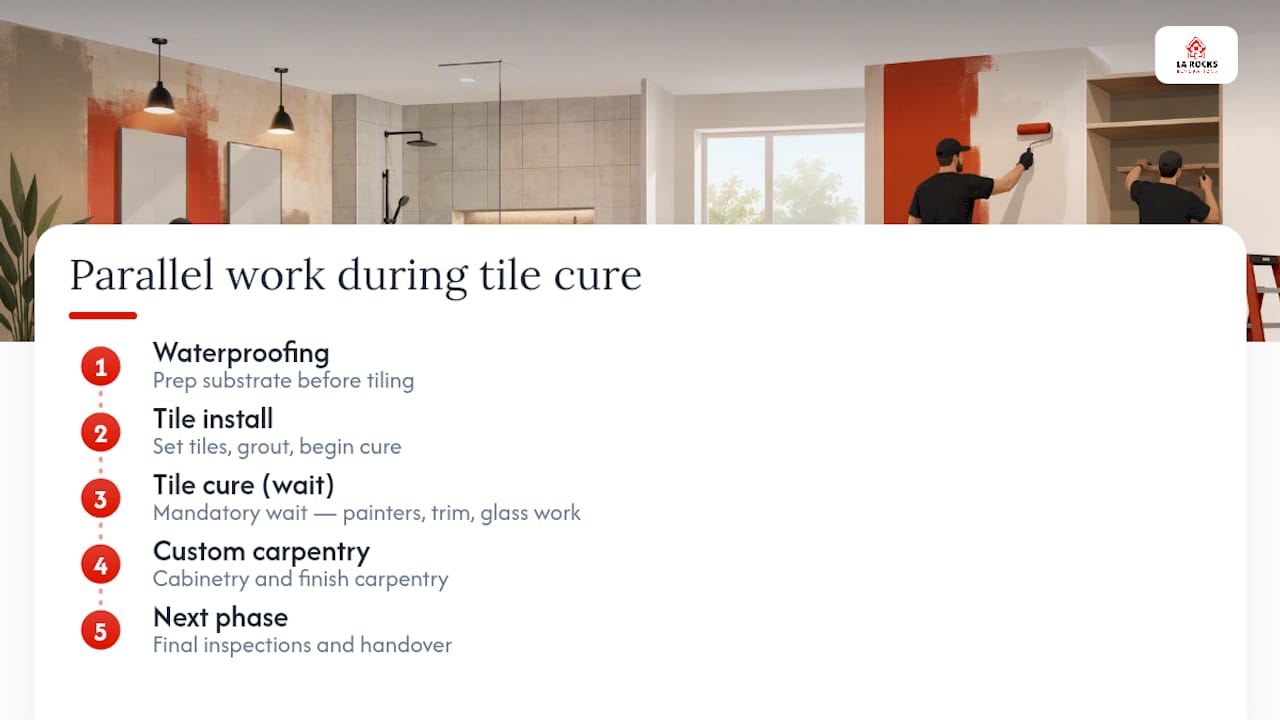
A general contractor with established trade relationships turns waiting days into working days by sequencing secondary trades, painters, trim, glass installers, to work during a mandatory tile cure instead of sitting idle. Some general contractors apply that sequencing on bathroom renovations alongside waterproofing, tile, and custom carpentry services to keep the schedule under one roof. For a phase-by-phase breakdown specific to local homes, see our bathroom renovation timeline guide.
A contractor’s honest take on bathroom renovation timelines
The rule I give every homeowner is simple: order your long-lead items before you book a start date, not after. Most delayed projects aren’t slowed by bad luck. They’re slowed by a vanity or glass panel that was ordered the week demolition started. Homeowners consistently underestimate the planning phase because it doesn’t feel like “the project” yet, but it sets every date that follows. When you’re comparing contractors, ask each one for a written schedule and compare them side by side. The one who names actual dates for inspections and cure waits is usually the one who’ll hit them.
— Dylan Larocque
Get a written timeline for your Bowmanville bathroom
A written critical-path schedule for bathroom renovations can name inspection dates, tile cure waits, and material delivery windows before demolition starts. That’s the difference between a verbal estimate and a plan you can actually hold a contractor to. Some contractors handle permit submissions and trade scheduling directly, so clients do not need to chase subcontractors or municipal offices mid-project.

If your bathroom project includes custom vanities, built-in shelving, or trim work that needs to be factored into the schedule, our custom carpentry services integrate directly into the same timeline. Ready to see what your project actually looks like on a calendar? Request a written estimate through our Bowmanville bathroom renovation page and get dates, not guesses.
Sources
- How long does a bathroom remodel take? A realistic bathroom remodel timeline - Urban Splatter
- Bathroom renovation timeline Canada guide (2026) — Bathify
- Bathroom remodel timeline — Build With Inspiration
- Bowmanville bathrooms with craftsman charm — Renovision Road