


Bathroom Waterproofing: What Bowmanville Homeowners Should Know
Request Your Free Estimate Today
GET A FREE ESTIMATE →The single most important call you’ll make in a bathroom renovation is this: a continuous waterproof membrane goes on during rough-in, before a single tile is set, paired with mechanical ventilation and a confirmed permit where one is required. Skip or rush that step and you’re not looking at a cosmetic problem down the road. You’re looking at rot in the subfloor, mould behind the tile, and a renovation you pay for twice.
Before your contractor starts demolition, ask three questions: what membrane system are they using, how long does it need to cure before tile goes on, and who is responsible for pulling permits with the Municipality of Clarington? If those answers come back vague, that’s your red flag.
- What membrane type is specified, and is it rated for the wet zone in question?
- How many hours or days of cure time does the manufacturer require?
- Who is filing the permit, and when does that happen relative to demolition?
LA Rocks Renovations builds waterproofing into every bathroom project from the first site visit, and our permits guide for Bowmanville bathroom renovations walks through exactly which projects need a permit before work starts.
Key Takeaways
Bathroom waterproofing succeeds when a continuous membrane is installed and fully cured before tiling, paired with working ventilation and the correct permits.
| Point | Details |
|---|---|
| Membrane before tile | Install a continuous waterproof membrane during rough-in and let it fully cure before any tile goes down. |
| Ventilation is part of the system | Pair the membrane with a properly vented exhaust fan or interim measures like a dehumidifier and post-shower airing. |
| Confirm permit triggers early | Moving fixtures, structural changes, or new ventilation ductwork typically require a permit from Clarington. |
| Watch for the common failure points | Poor drain slope, incomplete corner treatment, and rushed tiling cause most waterproofing failures. |
| Work with LA Rocks Renovations | LA Rocks Renovations coordinates permits, licensed trades, and warrantied membrane installation on every Bowmanville bathroom project. |
Table of Contents
- Bathroom waterproofing during renovation: where it fits in the schedule
- Wet zones, dry zones, and the materials that separate them
- Ventilation and moisture control aren’t optional extras
- Which renovations trigger a permit in Bowmanville
- Waterproofing and shower installation mistakes worth catching early
- What waterproofing costs and how long it realistically takes
- When a licensed contractor is worth the call
- Sources
Bathroom waterproofing during renovation: where it fits in the schedule
Waterproofing isn’t a standalone job. It’s one stage sandwiched between framing and finishing, and if it gets rushed to keep a schedule moving, nobody sees the damage until months later.
- Assessment. Your contractor evaluates the existing subfloor, plumbing layout, and any signs of prior water intrusion before touching anything.
- Demolition. Old tile, fixtures, and sometimes subfloor come out. This is when hidden rot or mould from a previous failure usually surfaces.
- Rough-in. Plumbing and electrical get relocated or upgraded, and the exhaust fan ducting goes in here too, not as an afterthought.
- Waterproofing. A continuous membrane goes over the shower pan, walls, and any floor area exposed to standing water or splash, following the layered approach (substrate, membrane, mortar bed, tile, functioning drain) that professional waterproofing standards call for.
- Tile and finishing. Tile only goes down once the membrane has fully cured, not once it looks dry.
The seams matter as much as the flat surfaces. Corners, the drain penetration, and the transition where wall meets floor are where most failures start, because that’s where installers cut corners or use the wrong sealant.
Pro Tip: Ask your contractor for photos of the membrane before tile goes on. A reputable crew will have no problem sending them, and it gives you a paper trail if something ever needs a warranty claim.
Confirm that rough-in has passed inspection, where one is required, before tile work begins. Tiling over an unsigned-off rough-in is one of the more common ways homeowners end up with rework bills.
Wet zones, dry zones, and the materials that separate them
Not every square foot of a bathroom needs the same waterproofing treatment, and understanding the difference saves you from over-paying or under-protecting.
A wet zone is anywhere water lands directly: the shower pan, tub surround, and splash zones around a freestanding tub. An adjacent zone — the rest of the bathroom floor, the wall behind a vanity — sees moisture indirectly, through humidity and the occasional spill, and typically gets a lighter vapour barrier rather than a full membrane.
- Sheet membranes bond directly to the substrate and offer strong, consistent coverage, but they demand precise seam work at corners.
- Liquid-applied membranes roll on like paint and conform well to irregular shapes, though they need multiple coats and full cure time between each.
- Cement board provides a stable tile substrate but isn’t waterproof on its own. It needs a membrane over top.
- Preformed shower pans and curbless assemblies come pre-sloped to the drain, which reduces on-site error but costs more upfront.
Curbless showers add another wrinkle: the floor slope has to be precise enough to drain properly while staying flush with the rest of the bathroom, and that’s a detail worth confirming with your contractor before tile selection locks in the slope.
Ventilation and moisture control aren’t optional extras
A perfect membrane still fails if the room stays humid for hours after every shower. Ventilation is the second half of a waterproofing strategy, not a separate line item, and it’s treated that way under most municipal codes because moisture and mould in a home follow proper ventilation practices closely, according to Health Canada guidance on indoor moisture management.
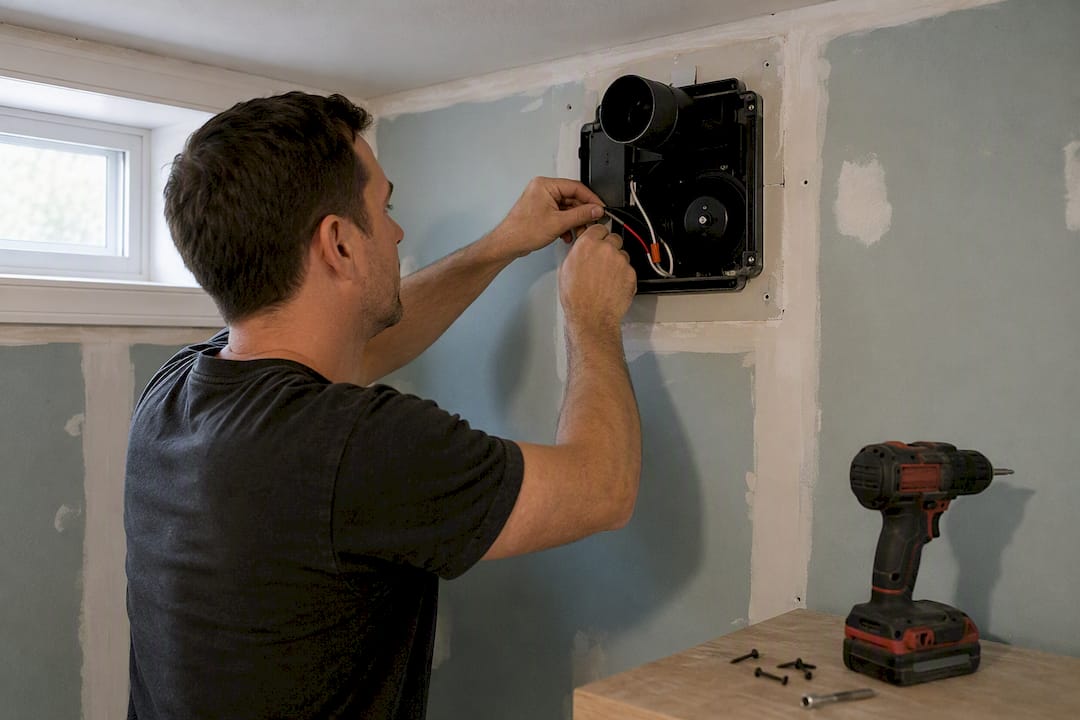
A mechanical exhaust fan, vented to the exterior and sized for the room, is the primary defence. If your layout makes a fan impossible to install right away, don’t leave the room to sort itself out.
- Run a portable dehumidifier in the bathroom on humid days or right after showers.
- Squeegee the shower walls and glass after every use to cut standing moisture.
- Leave the door or window cracked for 20 to 30 minutes post-shower to let humidity escape.
Aim to keep bathroom humidity from lingering above comfortable indoor levels for long stretches. Dehumidifiers reduce mould growth risk when airflow is limited, which matters most in basement bathrooms where natural ventilation is already working against you.
Pro Tip: If you’re finishing a basement bathroom, budget extra time for ventilation planning. Basement bathroom waterproofing has to work harder because there’s less natural airflow and often a higher water table nearby.
Check grout and caulking quarterly once the room is back in service. It’s a five-minute habit that catches small failures before they become expensive ones.
Which renovations trigger a permit in Bowmanville
Not every bathroom update needs a permit, but more projects trigger one than most homeowners expect. In Bowmanville, permit requirements fall under the Municipality of Clarington, and a permit is mandatory for renovations that involve structural changes, moved or added plumbing fixtures, significant electrical work, or changes to ventilation systems.
That covers more than people assume:
- Relocating a toilet, sink, or shower drain.
- Adding a new exhaust fan or altering existing ductwork.
- Removing or moving a wall, even a non-structural one in some cases.
- Upgrading electrical to support new lighting or a heated floor.
The sequence matters as much as the trigger itself: pull the permit, pass rough-in inspection, cover the work, then pass final inspection. Skipping ahead to save a week can mean opening up finished walls later. Keep every permit document. If you ever sell the home or file an insurance claim tied to water damage, that paperwork proves the work was done to code.
Waterproofing and shower installation mistakes worth catching early
Most bathroom waterproofing failures trace back to a handful of repeat mistakes, and nearly all of them are visible if you know where to look.
- Incomplete membrane coverage. Corners, niches, and the transition behind a vanity get skipped because they’re fiddly, not because they’re low-risk.
- Poor drain slope. Standing water on a shower floor means the slope wasn’t cut correctly, and it will find its way past the membrane eventually.
- Improper corner and seam treatment. These are the weak points in any membrane system, and manufacturers specify exact tape or fabric reinforcement for a reason.
- Tiling before the membrane cures. Rushing this step traps moisture under tile where you can’t see it until grout starts cracking or discolouring.
On-site, you can check for continuous membrane coverage yourself with a quick walkthrough before tile starts, and it’s reasonable to ask for a water test on the shower drain. Filling the pan and letting it sit overnight confirms the drain and membrane hold before anything gets covered permanently.
Pro Tip: After the renovation wraps, reseal grout lines annually and inspect caulking at the tub and shower edges every few months. It’s the cheapest maintenance task in the whole house.
What waterproofing costs and how long it realistically takes
Waterproofing costs scale with scope, not square footage alone. Moving plumbing fixtures, switching to a curbless shower, or upgrading to a preformed pan all add labour and material costs beyond a standard reglue-and-retile job. Tile choice matters too. Large-format tile needs a flatter substrate and more prep time than smaller mosaic tile.
On timeline, expect rough-in and waterproofing together to take several days once demolition is complete, with membrane cure time adding another day or two depending on the product. Tile and grout then need their own cure window before the shower sees regular use. Ontario renovation guides note that waterproofing timelines and wet zone treatment are non-negotiable parts of the schedule, not steps you compress to hit a deadline.
Our walk-in shower cost breakdown for Bowmanville gives real regional ranges for different shower configurations. If a quote comes in dramatically lower than others you’ve collected, ask specifically what waterproofing method is included. A bid that skips a proper membrane system to save money on paper usually costs more once problems surface.
When a licensed contractor is worth the call
Some waterproofing jobs are straightforward enough that a careful DIYer with the right product can manage a small repair. DIY sealants and waterproof paints work reasonably well as temporary fixes, but they’re not a substitute for a proper membrane system when the goal is long-term protection, especially in a full renovation.
Certain situations call for a licensed professional without exception:
- Curbless or barrier-free shower installations, where slope tolerances are unforgiving.
- Any project moving drains or supply lines.
- A bathroom with a history of repeat leaks or visible mould.
- Steam rooms or enclosed wet rooms, where humidity loads are far higher than a standard shower.
Before signing a contract, ask for proof of licensed trades, confirmation the installer works within manufacturer specifications for the membrane system, and a written warranty on the waterproofing work specifically, not just the tile finish.
A contract worth signing spells out the membrane brand and system, the cure time before tiling, who pulls permits, and what acceptance test happens before cover-up, whether that’s a water test on the drain or a documented visual inspection of the membrane.
Get that in writing before demolition starts, not after.
What Bowmanville homeowners should do next
The single most important action is still the membrane before the tile, backed by working ventilation and a confirmed permit where the scope calls for one. From there: get your scope of work in writing, confirm who’s filing permits with Clarington, and ask for membrane photos or a water test before anything gets covered.
— Dylan Larocque
How LA Rocks Renovations handles waterproofing on every bathroom job
LA Rocks Renovations builds waterproofing into the renovation contract from day one, not as an add-on line item you discover halfway through the job. That means permit coordination with the Municipality of Clarington, licensed plumbers on any project that moves fixtures, manufacturer-specified membrane installation, and a written warranty on the waterproofing itself.
An onsite assessment starts with a look at your existing bathroom, a conversation about scope (are you moving the shower, going curbless, upgrading ventilation?), and a written quote that spells out the membrane system, cure times, and who’s responsible for permits. No guessing at what’s included after the fact. If you’re ready to see what a proper waterproofing plan looks like for your space, our bathroom renovation services in Bowmanville page is the place to start, and you can request a quote directly from there.
Sources
- Municipality of Clarington — Building and demolition permits
- Health Canada — Addressing moisture and mould in your home
- The pro guide to basement waterproofing — The Home Depot (pro guide)