


Best Bathroom Flooring for Canadian Homes: Durable, Safe and Stylish
Dylan LarocqueRequest Your Free Estimate Today
GET A FREE ESTIMATE →For most Canadian bathrooms, the two strongest choices are porcelain tile and waterproof luxury vinyl plank (LVP/SPC). Porcelain wins when you want lifetime durability, radiant-heat compatibility, and a finish that holds up to decades of heavy use. Waterproof luxury vinyl wins when you need warmth underfoot, a lower installed cost, and a floating install that works over an existing subfloor. Both are genuinely waterproof through the body of the material, not just at the surface. For high-end projects, natural stone is a compelling third option — though it requires sealing and more maintenance. Sheet vinyl is the right call for utility rooms and tight budgets.
One safety rule applies regardless of which material you choose: any tile used in a wet area should carry a wet DCOF rating of 0.42 or higher per ANSI A137.1 guidance. Equally important, proper waterproofing and membrane systems — such as Schluter DITRA or KERDI — matter more to long-term performance than the price of the finish you choose.
| Material | Best for | Waterproof level | Typical installed cost (CAD/sq ft) |
|---|---|---|---|
| Porcelain tile | Primary baths, ensuites, radiant heat | Fully waterproof (body) | $12–$35 |
| LVP/SPC vinyl | Rentals, retrofits, budget renovations | Fully waterproof (body) | $4–$10 |
| Ceramic tile | Guest baths, powder rooms | Water-resistant (glazed surface) | $7–$20 |
| Natural stone | Luxury ensuites | Water-resistant (requires sealing) | $15–$50 |
| Sheet vinyl | Utility rooms, laundry-adjacent | Fully waterproof (seamless) | $3–$6.50 |
Table of Contents
- What to look for when choosing bathroom flooring
- The best bathroom flooring materials, compared
- Waterproof vs. water-resistant: what the difference means for your bathroom
- Installation and waterproofing essentials that protect your floor long-term
- How to choose the right floor and what to ask your installer
- What bathroom flooring actually costs in Canada
- Canadian climate, design trends, and safety: what local homeowners should know
- Key takeaways
- The upgrade most homeowners under-budget — a contractor’s view
- LA Rocks Renovations brings the right floor to your Durham Region bathroom
What to look for when choosing bathroom flooring
Not every bathroom faces the same water exposure. A shower floor in a primary ensuite takes a beating that a powder room never sees. Matching the material to the room’s actual conditions is the first decision to make.
- Waterproof vs. water-resistant: Fully waterproof materials (porcelain, LVP/SPC, sheet vinyl) resist standing water through the body of the product. Water-resistant materials (glazed ceramic, sealed stone) rely on a surface treatment that can degrade over time. Use fully waterproof materials anywhere water pools or splashes regularly.
- Slip resistance: Look for a published wet DCOF of 0.42 or higher for any tile in a wet zone. Matte and textured finishes outperform polished ones. Smaller mosaic tiles add traction because more grout lines mean more grip.
- Durability and lifespan: Porcelain and stone last many years with proper care. LVP/SPC lasts a moderate duration, while sheet vinyl and standard ceramic last a shorter time depending on traffic and maintenance.
- Maintenance: Grout lines need periodic sealing and cleaning. Stone requires resealing every one to three years. LVP/SPC and sheet vinyl need only damp mopping. Consider how much upkeep you are realistically willing to do.
- Comfort and warmth: Tile is cold underfoot in winter without radiant heating. LVP/SPC is noticeably warmer and softer. If you are not adding radiant heat, vinyl is more comfortable in a cold Canadian home.
- Radiant-heat compatibility: Porcelain conducts and retains heat exceptionally well. Most LVP/SPC products are compatible with low-temperature radiant systems, but always confirm the manufacturer’s maximum temperature rating before installation.
- Installation complexity: LVP/SPC floating installs are DIY-friendly. Large-format tile, natural stone, and any wet shower application should be handled by a professional with experience in waterproofing systems.
- Budget: Material cost is only part of the picture. Substrate remediation, membrane installation, and labour can double or triple the material price. Plan for the full installed cost, not just what you see on the shelf.
Pro Tip: Spend your budget on the substrate and waterproofing first. A $6/sq ft tile on a properly waterproofed substrate will outlast a $25/sq ft tile laid over a compromised subfloor.
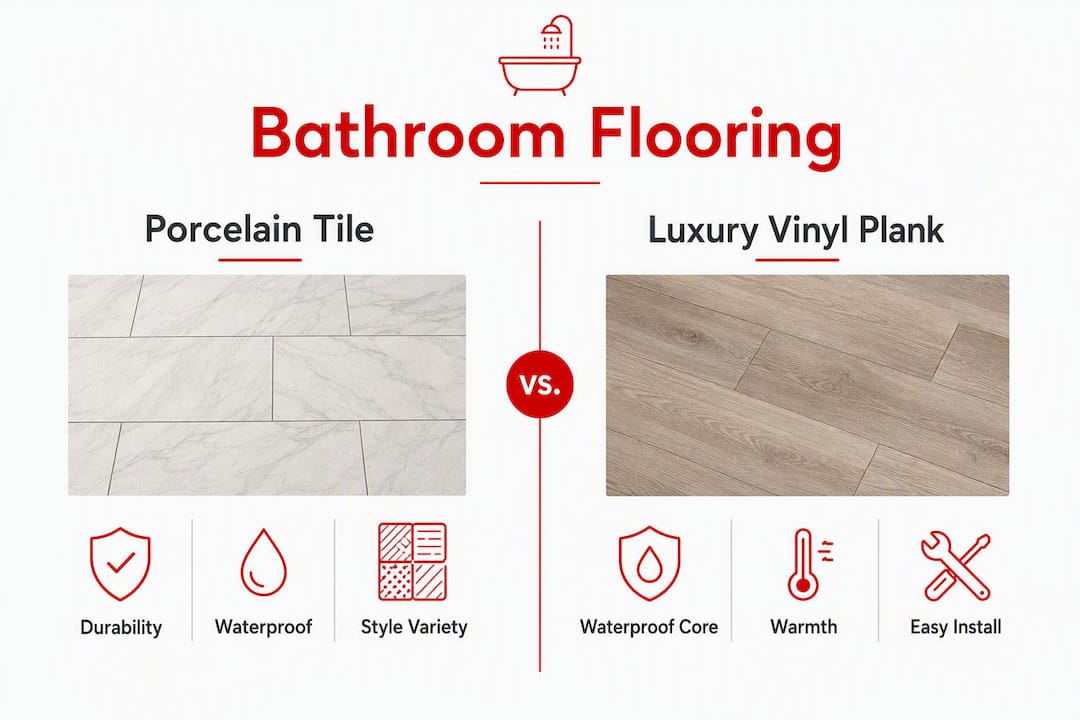
The best bathroom flooring materials, compared
1. Porcelain tile
Porcelain’s water absorption rate sits at or below 0.5%, making it effectively waterproof through the tile body — not just at the surface. That density also makes it the most durable clay-based tile available, resistant to stains, chips, and heavy foot traffic. It pairs naturally with radiant floor heating because its thermal mass spreads and holds heat efficiently, a real advantage in colder Canadian homes.
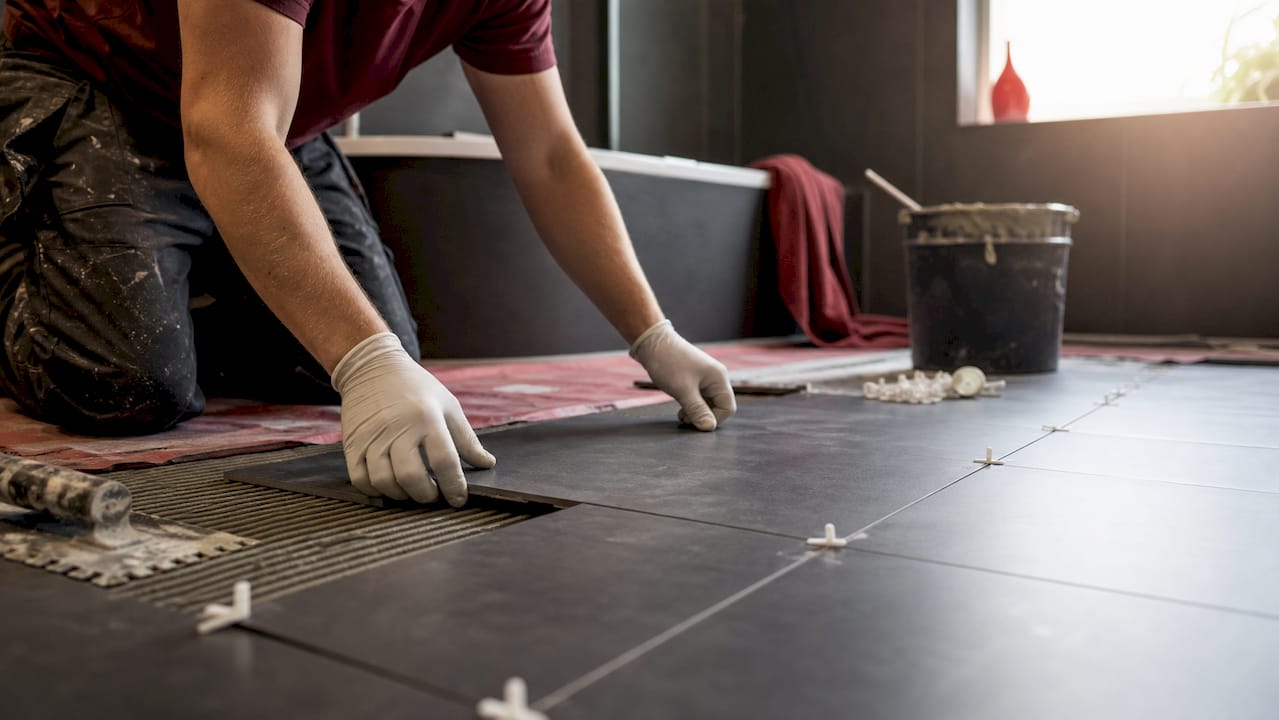
Finish and size choices matter for safety. Matte and textured surfaces perform better in wet zones than polished finishes. Wood-look porcelain delivers timber warmth without the water risk of real wood and requires no sealing. Warm-toned, large-format porcelain is the current design direction for Canadian bathrooms, and it happens to be a practical choice too.
Pros: Fully waterproof, 30+ year lifespan, radiant-heat friendly, low maintenance, enormous style range. Cons: Cold underfoot without heating, harder to DIY, higher installed cost than vinyl.
2. Ceramic tile
Ceramic is porcelain’s more affordable sibling. It is made from a coarser clay mixture and fired at lower temperatures, which makes it slightly more porous — but a quality glaze seals the surface effectively. For guest baths and powder rooms that see limited water exposure, glazed ceramic performs well and costs considerably less than porcelain.
The key is confirming the DCOF rating before you buy. Not all ceramic tiles are rated for wet floors. Stick to matte or textured glazes in any area that gets wet, and avoid high-gloss finishes on the floor.
Pros: Affordable, wide style selection, easy to find locally. Cons: More porous than porcelain, glaze can chip, not ideal for heavy-use wet areas.
3. Luxury vinyl plank and SPC
LVP and SPC planks are engineered to be fully waterproof through the core, warmer and softer underfoot than tile, and often installable directly over an existing floor. That last point makes them the go-to for retrofit projects where removing old tile is not practical. The click-lock floating system is genuinely DIY-friendly, which keeps labour costs down.
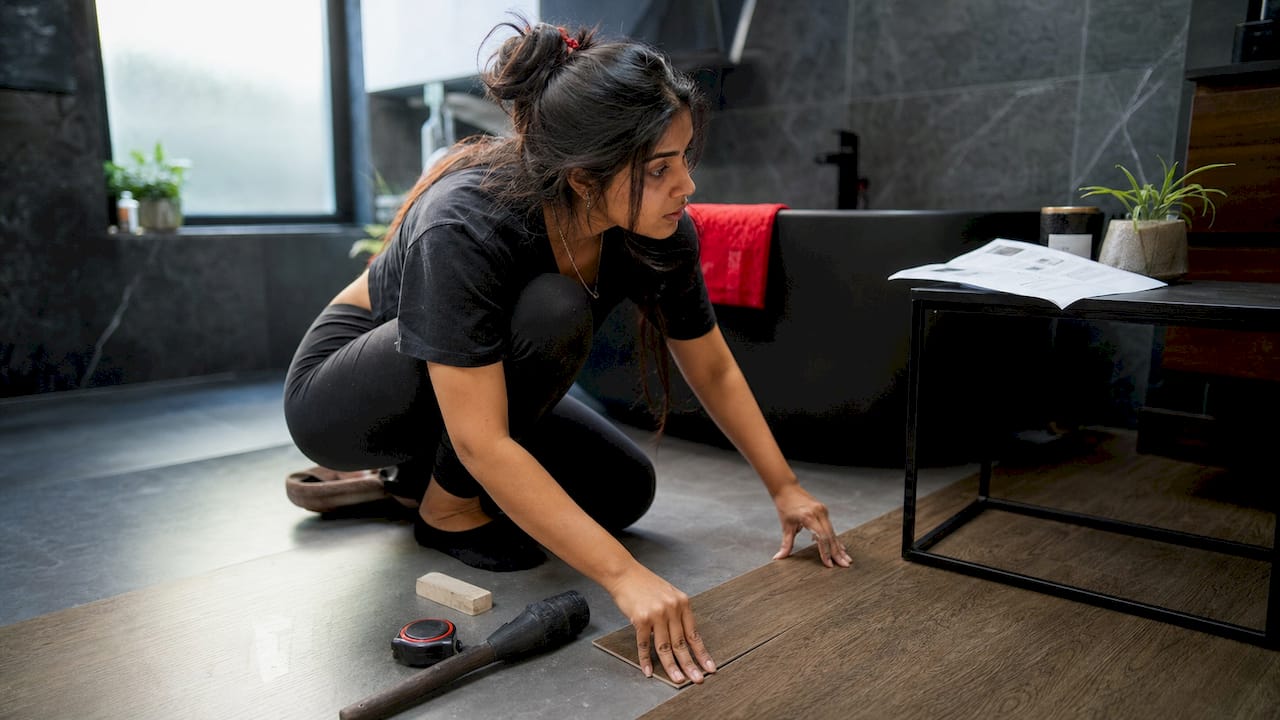
One caution: the planks themselves are waterproof, but seams between planks are not sealed. In a full shower application, LVP/SPC is not appropriate. For bathroom floors outside the shower zone, it performs very well.
Pros: Fully waterproof core, warm underfoot, easy floating install, budget-friendly, good for rentals. Cons: Not suitable for shower floors, seams can allow water to reach the subfloor over time, shorter lifespan than tile.
4. Sheet vinyl
Sheet vinyl is the most affordable genuinely waterproof option. Installed in a single continuous sheet with no seams, it eliminates the main water-infiltration risk that affects tile grout and vinyl plank seams. For utility rooms, laundry-adjacent spaces, and tight renovation budgets, it does exactly what it needs to do.
The aesthetic is more utilitarian than tile or LVP, though modern sheet vinyl has improved considerably in print quality. Lifespan is typically 10–20 years with proper care.
Pros: Lowest cost, seamless waterproofing, easy to clean. Cons: Less visually appealing, can show subfloor imperfections, shorter lifespan.
5. Natural stone
Marble, travertine, and slate bring a level of visual richness that no manufactured material fully replicates. Each slab is unique, and the material adds genuine resale value in luxury renovations. For luxury ensuite projects, natural stone is a strong choice when the budget and maintenance commitment are both present.
The trade-off is real: stone is porous and must be sealed before use, then resealed every one to three years. Polished marble is slippery when wet — always specify a honed finish for floors. Stone also requires a structurally sound, level subfloor and professional installation.
Pros: Unmatched aesthetics, very durable, adds resale value. Cons: Requires sealing and regular maintenance, expensive, slippery if polished, professional installation required.
6. Materials to avoid in full bathrooms
Solid hardwood expands and contracts with moisture changes, leading to warping, cupping, and eventual rot in a wet bathroom environment. Standard laminate (unless specifically rated for wet areas) behaves similarly — the wood-composite core swells when water reaches it through seams. Carpet retains moisture, promotes mould growth, and is nearly impossible to dry out properly. Untreated bamboo shares hardwood’s moisture vulnerabilities.
These materials may work in a dry powder room with minimal water exposure, but they are not appropriate for primary baths, ensuites, or any space with a shower or tub.
Quick pick by project type:
- Primary bathroom or ensuite: Porcelain tile with a waterproofing membrane
- Powder room: Ceramic tile, LVP, or even natural stone if the budget allows
- Rental or retrofit: LVP/SPC floating install over existing floor
- Utility or laundry-adjacent: Sheet vinyl for seamless, low-cost waterproofing
- Luxury renovation: Natural stone with a honed finish and professional waterproofing
Full material comparison:
| Material | Waterproof level | Lifespan | Maintenance | Slip resistance | Radiant heat | Cost CAD/sq ft (installed) | Aesthetic |
|---|---|---|---|---|---|---|---|
| Porcelain tile | Fully waterproof | long lifespan | Low | Good (matte/textured) | Excellent | moderate to higher cost | Versatile, wood/stone looks |
| Ceramic tile | Water-resistant | medium lifespan | Low–medium | Good if matte | Good | moderate cost | Wide range |
| LVP/SPC | Fully waterproof | moderate lifespan | Very low | Good | Compatible (check specs) | moderate cost | Wood/stone looks |
| Sheet vinyl | Fully waterproof | medium lifespan | Very low | Moderate | Limited | lower cost | Utilitarian |
| Natural stone | Water-resistant | long lifespan | High | Honed only | Good | higher cost | Luxury, unique |
Waterproof vs. water-resistant: what the difference means for your bathroom
These two terms get used interchangeably in marketing copy, but they describe very different levels of protection. Getting this wrong is one of the most common reasons bathroom floors fail prematurely.
Waterproof means the material itself will not absorb water, even with prolonged exposure. Porcelain tile, LVP/SPC, and sheet vinyl all fall into this category. The tile body, the vinyl core, or the continuous sheet simply does not let water through.
Water-resistant means the material can handle brief moisture exposure but will eventually allow water penetration under sustained contact. Glazed ceramic is water-resistant at the surface, but the clay body beneath the glaze is porous. Sealed natural stone is water-resistant until the sealer degrades.
The critical misunderstanding with tile: the tile itself may be fully waterproof, but the grout and the substrate beneath it are not. Grout is porous and will absorb water unless sealed. The cement board or plywood subfloor beneath the tile is also vulnerable. This is why a waterproofing membrane installed between the subfloor and the tile layer is so important in any wet application.
Which materials are genuinely waterproof, and which need extra protection:
- Fully waterproof (material body): Porcelain tile, LVP/SPC, sheet vinyl
- Waterproof surface, porous body: Glazed ceramic tile (needs membrane in wet zones)
- Porous, requires sealing: Natural stone, encaustic/cement tile
- Requires full membrane system: Any tile application in a shower or wet room
- Not suitable for wet bathrooms: Solid hardwood, standard laminate, carpet, untreated bamboo
Installation and waterproofing essentials that protect your floor long-term
The finish material gets all the attention, but the layers beneath it determine whether the floor lasts five years or fifty. Most bathroom floor failures trace back to the substrate, not the tile or vinyl on top.
Must-have items to confirm in any contractor quote:
- Subfloor assessment and repair: The subfloor must be structurally sound, level within 3/16" over 10 feet (for tile), and free of soft spots or rot before any new flooring goes down.
- Vapour management: In slab-on-grade or basement bathrooms, a vapour barrier or appropriate membrane is required to prevent moisture migration from below.
- Waterproofing membrane: For any tile application in a wet zone, a professional-grade membrane/Schluter%C2%AE-KERDI/p/KERDI) such as Schluter KERDI or DITRA should be specified by name in the quote. Vague references to “waterproofing” without a named product are a red flag.
- Slope to drain: Shower floors must slope a minimum of 1/4" per foot toward the drain. Flat shower floors hold water and cause failures.
- Uncoupling membrane (for tile): Schluter DITRA decouples the tile from the subfloor, accommodating movement and preventing cracked tiles over time. This is particularly valuable in Canadian homes where seasonal temperature swings cause subfloor movement.
- Grout selection and sealing: Epoxy grout is non-porous and requires no sealing. Standard cement grout should be sealed after installation and resealed periodically. Confirm which type is specified.
- Old floor removal: Laying new tile over old tile is sometimes done, but it raises the floor height and can hide subfloor problems. Ask specifically whether old flooring will be removed and the subfloor inspected.
- Linear drain or traditional drain: Confirm drain type and whether the waterproofing membrane integrates properly with the drain assembly.
Pro Tip: Ask for a written waterproofing scope that names the membrane product, the application method, and any warranty the installer provides on the waterproofing work specifically. If a contractor cannot provide this, keep looking.
When to hire a professional: large-format tile (anything over 24"x24"), natural stone, wet room or curbless shower installations, and any project involving subfloor remediation or radiant-heat integration all require experienced hands. LVP/SPC floating installs in a standard bathroom are genuinely manageable for a confident DIYer, provided the subfloor is properly prepped first.
How to choose the right floor and what to ask your installer
A clear process saves time, money, and regret. Work through these steps before requesting quotes.
Decision checklist:
- Define the room’s use: shower present, ensuite, powder room, laundry-adjacent, or rental?
- Set a realistic budget including installation, membrane, and substrate work.
- Shortlist two or three materials based on waterproof requirements and maintenance tolerance.
- Confirm the DCOF rating of any tile you are considering (wet DCOF ≥ 0.42 for wet areas).
- Decide on finish: matte or textured for safety, warm tones for current design direction.
- Determine whether radiant floor heating is part of the project — this affects material choice and installation sequence.
- Get at least three quotes with identical scopes so you are comparing like with like.
Questions to ask every installer before signing:
- What waterproofing membrane will you use, and what is the brand and product name?
- How will you prepare the subfloor, and will you remove the existing floor first?
- Can you show me the DCOF data sheet for the tile you are recommending?
- Do you have examples of similar tile or stone installations you have completed locally?
- What is the slope to drain in the shower, and how will you achieve it?
- What warranty do you offer on the waterproofing work specifically?
- Are there any permits required for this project in my municipality?
Red flags to watch for:
- No written waterproofing scope in the quote
- Membrane described only as “waterproofing” with no product name
- No mention of subfloor inspection or preparation
- Missing DCOF data or inability to provide product specifications
- Significantly lower price than other quotes with no explanation
The complete bathroom renovation checklist from LA Rocks Renovations covers additional vetting steps for Durham Region homeowners planning a full renovation.
What bathroom flooring actually costs in Canada
Budgeting accurately means accounting for more than the material price on the shelf. Labour, membrane, substrate work, and removal of old flooring all add to the final number.
| Material | Material only (CAD/sq ft) | Installed (CAD/sq ft) | Expected lifespan |
|---|---|---|---|
| Porcelain tile | $4–$15 | $12–$35 | 30+ years |
| Ceramic tile | $2–$8 | $7–$20 | 10–20 years |
| LVP/SPC | $2–$5 | $4–$10 | 15–25 years |
| Sheet vinyl | $1–$3 | $3–$6.50 | 10–20 years |
| Natural stone | $8–$30 | $15–$50 | 30+ years |
Common additional costs to budget for:
- Subfloor remediation (levelling, rot repair): $3–$8/sq ft depending on severity
- Waterproofing membrane installation: $3–$6/sq ft
- Radiant floor heating (electric mat system): $8–$15/sq ft installed
- Removal and disposal of old flooring: $1–$3/sq ft
Sample budget for a 40 sq ft bathroom:
- Low tier (sheet vinyl, basic prep): $400–$600 in materials, $500–$800 installed
- Mid tier (LVP/SPC or ceramic tile, standard membrane): $800–$1,400 installed
- High tier (porcelain tile, full membrane, radiant heat): $2,000–$3,500+ installed
When reading quotes, look for separate line items for material, labour, waterproofing, and substrate work. A single lump-sum quote makes it impossible to understand what you are actually getting. The flooring installation services offered by LA Rocks Renovations include itemised quotes so homeowners can see exactly where their money is going.
Canadian climate, design trends, and safety: what local homeowners should know
Canadian bathrooms face conditions that most international flooring guides do not account for. Cold winters mean cold floors, seasonal humidity swings, and homes where radiant heating is not a luxury but a genuine comfort upgrade.
The design direction in Canadian bathrooms has shifted clearly away from cold, large-format grey tile toward
and pattern-forward floors. This trend has a practical benefit beyond aesthetics: textured surfaces improve grip in wet conditions, and smaller-format patterned tiles create more grout lines, which add traction.
For cold-climate homes, porcelain paired with radiant floor heating is the most effective comfort upgrade available. Porcelain’s thermal mass spreads and holds heat from radiant systems efficiently, so the floor stays warm longer after the system cycles off. Renovation professionals working in Durham Region consistently recommend this combination for primary baths and ensuites — it changes how the room feels more than almost any other single upgrade.
Safety deserves a direct statement: a wet DCOF of 0.42 or higher is the minimum for any tile walked on when wet. Mosaic tiles and textured finishes meet this threshold more reliably than large-format polished tiles. If you are choosing tile for a shower floor or a bathroom used by children or older adults, prioritise a published DCOF rating over aesthetics.
Pro Tip: When reviewing local bathroom design trends for Bowmanville and Clarington homes, warm-toned wood-look porcelain in a 12"x24" or 24"x48" format is consistently the most requested finish — and it pairs well with both radiant heat and matte grout for a low-maintenance result.
LA Rocks Renovations provides bathroom renovation services across Durham Region, including material selection guidance, waterproofing installation, and radiant-heat integration for homeowners in Bowmanville, Clarington, Newcastle, Oshawa, Whitby, Ajax, Pickering, and Peterborough.
Key takeaways
Porcelain tile or waterproof LVP/SPC suits most Canadian bathrooms, but long-term performance depends on proper waterproofing and substrate preparation, not the finish material alone.
| Point | Details |
|---|---|
| Top material choices | Porcelain tile and LVP/SPC are the best picks for most Canadian bathrooms, balancing waterproofing, durability, and style. |
| Safety minimum | Any tile in a wet area should carry a wet DCOF rating of 0.42 or higher to reduce slip risk. |
| Waterproofing first | A named membrane system (such as Schluter DITRA or KERDI) in the substrate matters more than the finish material’s price. |
| Radiant heat pairing | Porcelain’s thermal mass makes it the best match for radiant floor heating in cold Canadian climates. |
| LA Rocks Renovations | LA Rocks Renovations provides bathroom flooring installation with itemised waterproofing scopes across Durham Region. |
The upgrade most homeowners under-budget — a contractor’s view
The most common mistake seen in bathroom flooring projects is not choosing the wrong tile. It is skipping the membrane. Homeowners spend hours selecting the perfect porcelain, then accept a quote that describes waterproofing as a single vague line item with no product name attached. Two or three years later, grout cracks, tiles shift, and water has found its way into the subfloor. The repair costs more than the original membrane would have.
The second most common mistake is choosing a highly polished finish for the floor. Polished marble and high-gloss porcelain look stunning in showroom photos. On a wet bathroom floor, they are genuinely hazardous. The DCOF rating on a polished tile is often well below the 0.42 minimum for wet areas. Matte and textured finishes are not a compromise — they are the correct choice for a floor that gets wet.
The upgrade that consistently surprises homeowners is the combination of an uncoupling membrane and radiant floor heating, added at the time of a tile replacement. The membrane is already part of a proper installation. Adding a low-voltage electric heating mat beneath the tile adds relatively little to the project cost when the floor is already open, and the result is a bathroom that feels completely different on a January morning in Durham Region. Most homeowners who skip it wish they had not.
One practical note on scheduling: bathroom flooring projects in Durham Region typically do not require a building permit unless the scope includes structural changes or plumbing relocation. Confirm with your municipality before starting, particularly if you are adding a wet room or curbless shower. The common renovation mistakes guide from LA Rocks Renovations covers permitting and sequencing pitfalls specific to local projects.
LA Rocks Renovations brings the right floor to your Durham Region bathroom
Choosing the right material is only half the job. The other half is having it installed correctly, with a waterproofing scope you can actually read and a contractor who will stand behind the work.

LA Rocks Renovations handles the full scope of bathroom flooring projects across Durham Region, from Bowmanville and Clarington to Oshawa, Whitby, Ajax, and Pickering. That means material selection guidance, subfloor assessment, membrane installation, tile or vinyl laying, and radiant-heat integration, all under one contract with clear line items. Every quote includes the membrane product name, the waterproofing method, and the DCOF confirmation for any tile specified. No vague scopes, no surprises after the floor is down.
If you are planning a bathroom renovation and want a site visit and written estimate, contact LA Rocks Renovations directly through the bathroom renovations page. For homeowners also considering how the rest of the bathroom comes together, it is worth knowing that complete bathroom renovations — including interior finishing and trim work considerations — are part of how LA Rocks Renovations approaches every project from the floor up.