


What It Really Costs to Add a Bathroom in Bowmanville
Request Your Free Estimate Today
GET A FREE ESTIMATE →Expect to pay roughly $5,000 to $15,000 for a half bath addition, $20,000 to $50,000 for a full bathroom addition, and $8,000 to $30,000 for a full renovation of an existing bathroom in Bowmanville, depending on scope and finishes. Basement bathrooms often land at $10,000 to $30,000 because of drainage complications. The single biggest swing factor in any quote is whether the plumbing stays where it is or has to move.
Three things drive the final number more than anything else:
- Plumbing moves. Relocating a toilet, tub, or vanity away from existing supply and drain lines adds labour and sometimes engineering costs that dwarf the price of the fixtures themselves.
- Finish level. Builder-grade tile and a stock vanity cost dramatically less than natural stone, custom cabinetry, or a curbless glass shower.
- Labour availability. Durham Region’s contractor demand fluctuates seasonally, and spring and fall bookings tend to run tighter than winter.
Pro Tip: Budget a contingency of 10 to 15% on top of your contractor’s quote before you sign anything. This isn’t padding. It’s the buffer that keeps a discovered plumbing issue or rotted subfloor from turning into a stressful mid-project decision.
Get two or three quotes from local contractors before committing to a scope. A quote gap of a few thousand dollars usually means the contractors are pricing different work, not just different margins.
Key Takeaways
| Point | Details |
|---|---|
| Cost ranges by scope | Cosmetic refresh runs $3,000 to $8,000; mid-range renovation $12,000 to $25,000; full gut $25,000 to $60,000+; new additions $20,000 to $75,000. |
| Plumbing moves drive cost | Keeping fixtures in place instead of relocating them can save $2,000 to $5,000 on labour and rerouting. |
| Basement bathrooms cost more | Drainage below the main stack (upflush systems or concrete cutting) pushes basement bathrooms to $10,000 to $30,000. |
| Budget a contingency | Set aside 10 to 15% of your total budget for hidden issues like moisture damage or outdated wiring found during demolition. |
| Permits protect resale value | Permit fees typically run $500 to $2,500 for additions, and skipping required permits risks insurance and resale complications. |
| Get local quotes to compare | LA Rocks Renovations serves Bowmanville and Durham Region with bathroom renovation and addition projects scoped to local permit and drainage realities. |
Table of Contents
- How much does it cost to add a bathroom in Bowmanville by project type?
- What does a bathroom renovation cost breakdown look like?
- How much are permits and how long does the project take?
- How do you budget and pay for a bathroom renovation or addition?
- What questions should you ask before hiring a contractor?
- Local Bowmanville project examples and what they teach
- Why does bathroom renovation cost vary within Bowmanville itself?
- Should you DIY your bathroom addition or hire a professional in Bowmanville?
- What Bowmanville homeowners consistently get wrong about bathroom budgets
- Get a bathroom renovation quote in Bowmanville
- Sources
How much does it cost to add a bathroom in Bowmanville by project type?
The answer depends entirely on which of six distinct project types you’re actually planning, because “adding a bathroom” and “renovating a bathroom” are two different cost conversations that get lumped together constantly.
Cosmetic refresh: $3,000 to $8,000
A cosmetic refresh means new paint, a new toilet, a re-glazed or replaced tub, updated fixtures, and maybe a new vanity top, all without touching the existing plumbing layout. Local guidance for Bowmanville places this bracket at $3,000 to $8,000, and it’s the fastest way to modernize a dated bathroom without a permit process or a demolition mess. This tier suits a bathroom that functions fine but looks tired.
Mid-range renovation: $12,000 to $25,000
This is where most Bowmanville homeowners actually land. A mid-range renovation typically includes new tile flooring and shower surround, a new vanity and countertop, updated lighting, a new tub or shower enclosure, and sometimes minor plumbing adjustments. Local pricing puts this bracket at $12,000 to $25,000, which tracks closely with the broader industry range of $8,000 to $15,000 for a typical full remodel and up to $30,000 for higher-end finishes that HomeStars documents for the Bowmanville market.
Full gut renovation: $25,000 to $60,000+
A full gut strips the bathroom to the studs. Every surface, every fixture, and often the subfloor gets replaced, and this is usually when homeowners discover the moisture damage or outdated wiring hiding behind the old tile. Bowmanville-specific guidance sets this range at $25,000 to $60,000 or more, with the upper end driven by custom tile work, heated floors, and premium fixtures.
New bathroom addition: $20,000 to $75,000
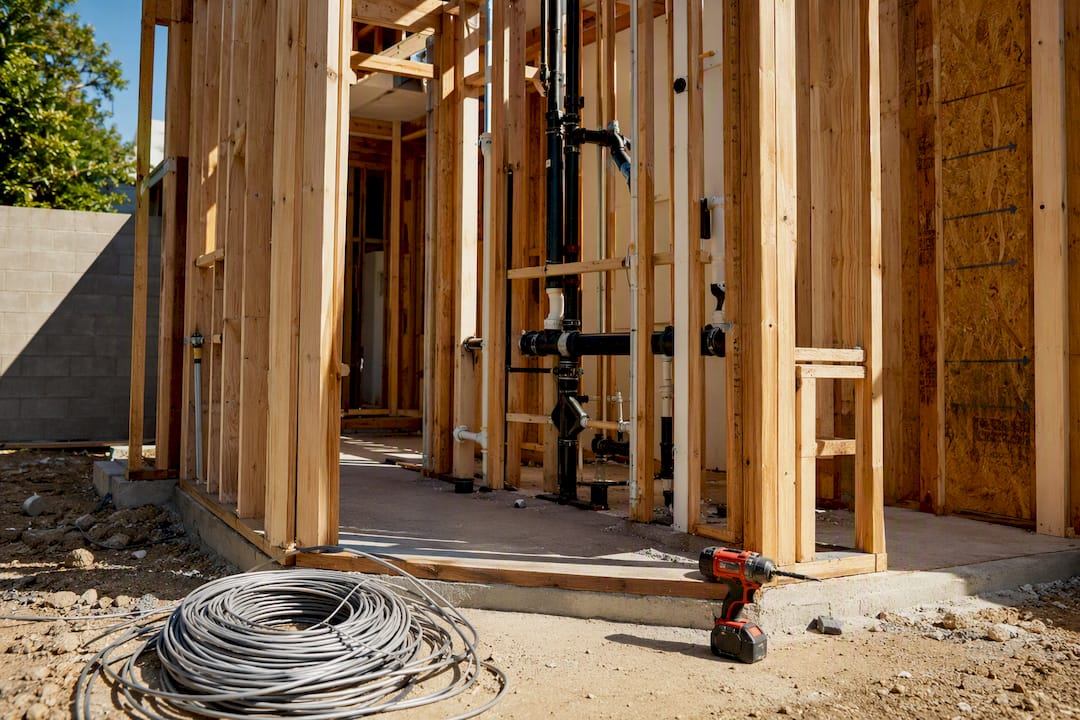
Adding a bathroom where none existed is a different animal entirely because you’re not renovating, you’re building. A half bath addition (toilet and sink only, no shower) commonly runs $5,000 to $15,000. A full bathroom addition with a shower or tub jumps to $20,000 to $50,000, and a second-storey addition that requires new plumbing stacks running through existing floors can reach $25,000 to $75,000. The wide spread exists because you’re paying for new framing, new supply and drain lines routed through finished walls, ventilation, and often an electrical circuit that didn’t exist before.
Basement bathroom: $10,000 to $30,000
Basement bathrooms carry a cost signature all their own. Most basement slabs sit below the home’s main drain line, which means gravity drainage isn’t an option. Contractors either cut into the concrete slab to install below-grade piping or install an upflush (macerating) system that pumps waste up to the existing stack. Plumbline Construction’s cost data frames typical basement bathroom projects at $10,000 to $30,000, with the concrete-cutting scenario landing at the higher end.
How size and layout shift these numbers
Square footage matters, but not in a straight line. NerdWallet’s cost analysis puts per-square-foot pricing at roughly $70 to $250 depending on finish level, and a small powder room can actually cost more per square foot than a larger bathroom because fixed costs (permits, one plumber’s minimum call-out, one electrician’s minimum visit) don’t shrink with the room. A tight 5x8 bathroom with a tub-to-shower conversion and moved plumbing can cost nearly as much as a 10x10 bathroom that keeps its layout intact. Complexity, not square footage, is usually the better cost predictor.
Here’s a quick way to sort your project into the right bracket:
- Are you keeping every fixture in its current spot? If yes, you’re likely looking at a cosmetic refresh or mid-range renovation.
- Is anything moving, even a few feet? Moving a toilet or shower drain pushes you toward the top of the mid-range bracket or into full-gut territory.
- Does the bathroom exist today? If you’re carving a new bathroom out of a closet, hallway, or basement corner, you’re in addition territory, not renovation territory.
- Is it below grade? Basement projects need a drainage decision before any other pricing conversation makes sense.
What does a bathroom renovation cost breakdown look like?
Reading a contractor’s quote is easier once you know roughly what each line item should cost, because “labour” and “materials” hide a lot of variation underneath them.
Plumbing rough-in and fixture placement is usually the line item that surprises homeowners most. Keeping fixtures in their existing locations avoids the labour and material cost of rerouting supply and drain lines, and industry sources consistently flag this as the single most effective way to control cost. Moving a toilet three feet across a room isn’t a minor tweak. It often means opening the floor, extending the drain line at the correct slope, and patching the subfloor before tile even enters the conversation.
Here’s how the major categories typically break down:
- Labour: Often the largest single cost, commonly representing about 40% of the total project cost according to national remodel data. Bowmanville rates track close to broader Durham Region averages.
- Plumbing rough-in and fixture moves: $500 to $3,000 for minor adjustments, climbing significantly higher if drain lines need rerouting or a stack needs extending.
- Tile and tile labour: Ranges enormously based on material choice, from budget ceramic at a few dollars per square foot to natural stone or large-format porcelain that multiplies both material and installation time.
- Waterproofing: A non-negotiable step behind any tiled shower or tub surround, typically built into the tile labour quote rather than itemized separately, but worth confirming explicitly since skipping it causes the moisture damage that shows up years later.
- Vanity and cabinetry: Stock vanities start affordably; custom cabinetry with soft-close drawers and matched millwork sits at the top end.
- Tub or shower unit: A one-piece acrylic tub/shower combo costs far less than a curbless tiled shower with a linear drain and glass enclosure.
- Fixtures and faucets: Faucet sets, showerheads, and toilets span a wide price range depending on brand and finish (brushed nickel and matte black typically cost more than chrome).
- Electrical upgrades: Adding a GFCI circuit, updated lighting, or an exhaust fan often requires an electrician’s separate visit and permit.
Permits, design, and contractor overhead deserve their own line rather than getting buried in “labour.” Permit fees for additions commonly run $500 to $2,500, and any project that adds square footage or new plumbing venting typically needs engineering sign-off.
The plumbing-versus-layout distinction is worth walking through with a concrete comparison. A bathroom that keeps its toilet, sink, and shower exactly where they are might spend $1,500 total on plumbing work: new supply lines to fixtures, a new shutoff valve, maybe a new drain trap. The same bathroom with the toilet moved eight feet and the shower relocated to the opposite wall could spend $4,000 to $8,000 on plumbing alone, because now you’re cutting subfloor, extending vent stacks, and possibly dealing with joist obstructions. That $2,500 to $6,500 difference exists before a single tile gets set.
Basement bathrooms add another layer entirely. Because drainage below the main stack requires either an upflush system or concrete cutting, the plumbing line item alone can run several thousand dollars higher than an equivalent above-grade bathroom, even before accounting for the finishing work.
How much are permits and how long does the project take?
Permits aren’t just paperwork. They trigger inspections that catch structural or electrical problems before they get sealed behind drywall, and skipping a required permit creates real risk for insurance claims and future resale if a buyer’s home inspector later flags unpermitted plumbing or electrical work.
- Cosmetic refreshes generally don’t require a permit if no plumbing or electrical layout changes, and typically take one to two weeks from demolition to final walkthrough.
- Mid-range renovations may need a plumbing permit if a fixture moves even slightly, and usually take two to four weeks depending on tile lead times and subtrade scheduling.
- Full gut renovations almost always require plumbing and electrical permits, and timelines commonly run four to six weeks, longer if structural repairs surface once walls open up.
- New bathroom additions require building, plumbing, and often electrical permits, plus an engineering review if the addition affects load-bearing structure. Expect six to twelve weeks depending on municipal inspection scheduling and whether the project involves a second-storey stack extension.
- Basement bathrooms need plumbing permits at minimum, and concrete-cutting jobs typically add one to two weeks purely for the slab work and curing time before framing starts.
Municipal permit fees generally scale with project value and typically fall in the $500 to $2,500 range for additions, with smaller fees for straightforward plumbing permits on a renovation. LA Rocks Renovations covers the local permit process for Bowmanville bathroom projects in more detail, including which municipal department handles inspections.
Hidden costs tend to cluster around three culprits: water damage discovered once old tile or flooring comes out, wiring that doesn’t meet current code once an electrician actually looks at it, and structural surprises like a joist that needs reinforcing to support a new tub. None of these show up on a pre-demolition quote because nobody can see them until the walls open.
How do you budget and pay for a bathroom renovation or addition?
Contingency planning is the difference between a stressful renovation and a manageable one. Contractors and industry guides commonly recommend setting aside 10 to 15% of your total budget specifically for the unexpected, and that money gets spent more often than homeowners expect. It covers the plumber who finds a corroded drain pipe behind the old tub, the electrician who discovers ungrounded wiring, or the framer who finds soft subfloor from a slow leak nobody knew about.
Beyond the contingency, a handful of tactics genuinely move the needle on total cost:
- Keep fixtures where they are. This single decision can save $2,000 to $5,000 by avoiding new drain and supply line routing.
- Choose mid-range materials over premium ones. A quality ceramic tile installed well often looks nearly as good as natural stone at a fraction of the material cost.
- Phase the work. Tackle the shower and plumbing this year, the vanity and lighting next year, if cash flow is tight and the bathroom is functional in between phases.
- Reuse fixtures where practical. A tub or vanity in good condition doesn’t need replacing just because everything around it is new.
Pro Tip: Ask your contractor which finishes are “in stock” versus special order before you fall in love with a tile pattern. Special-order materials can add two to four weeks to your timeline and sometimes carry a rush fee if a shipment gets delayed.
Financing options each carry trade-offs worth weighing before you commit. A personal loan offers fixed payments and fast approval but usually carries a higher interest rate than secured options. A home equity line of credit (HELOC) typically offers a lower rate and flexible draw amounts, but it’s secured against your home and requires equity to qualify. Contractor financing or payment terms, when offered, can smooth cash flow across project phases, but always read the fine print on interest-free periods and what happens if payments run late.
The step-by-step planning guide from Ready Renovation breaks down the standard remodel phases in more detail if you want a fuller timeline reference before you start budgeting against a calendar.
What questions should you ask before hiring a contractor?
The gap between a fair quote and a problem contract almost always shows up in the scope details, not the bottom-line number. A vague scope is how a $15,000 quote turns into a $22,000 final invoice.
Ask every contractor you’re considering these questions before comparing prices:
- Who pulls the permits, and is that included in the quote? If the answer is vague, that’s a red flag.
- Are subcontractors (plumber, electrician) licensed and insured, and can you provide proof?
- What warranty applies to labour, and separately, what warranty applies to materials?
- What’s the realistic timeline, including lead time for special-order materials?
- Can you provide references from two or three recent Bowmanville or Durham Region projects?
- What happens if hidden damage is found once demolition starts, and how is that priced?
- Can you provide a written scope that lists every fixture, material, and finish by name or model?
Comparing bids gets far easier once every quote answers the same seven questions. Line up the written scopes side by side. Does one quote specify tile by name and square footage while another just says “tile work”? Does one include permit fees while another leaves them as a separate line the homeowner has to chase down? A cheaper number attached to a vague scope usually isn’t actually cheaper.
Watch for these hiring red flags: no proof of insurance, a scope that’s a single vague sentence, a bid dramatically lower than every other quote you received, or a contractor who can’t produce a single local reference. Any one of these should slow you down before you sign.
Local Bowmanville project examples and what they teach
LA Rocks Renovations has completed bathroom renovations and additions across Bowmanville, Clarington, and the wider Durham Region, and two recent projects illustrate how the numbers above play out in practice.
One Bowmanville homeowner requested a mid-range renovation: new tile shower surround, vanity replacement, and updated lighting, with the toilet and shower kept in their original locations. The project landed near the middle of the $12,000 to $25,000 bracket and finished in just under three weeks, largely because the plumbing didn’t need to move.
A second project involved converting an unused basement storage room into a three-piece bathroom in Clarington. Because the slab sat below the home’s main drain, the plumber installed an upflush system rather than cutting concrete, which kept the project closer to the lower end of the basement bathroom range while still adding roughly two weeks to the schedule for the drainage decision and equipment lead time.
Three takeaways come up repeatedly across projects like these:
- The most common surprise is moisture damage behind old tile, not electrical issues.
- The most reliable savings come from decisions made before demolition, not during it.
- Timelines slip most often because of special-order material lead times, not labour scheduling.
Full local cost detail and timeline guidance live on LA Rocks Renovations’ Bowmanville bathroom cost guide and timeline breakdown.
Why does bathroom renovation cost vary within Bowmanville itself?
Two homes on the same Bowmanville street can get quotes that differ by thousands of dollars for what looks like the same job, and local factors explain most of that gap. Older homes in Bowmanville’s established neighbourhoods, particularly those built before modern plumbing codes, often need supply line or drain upgrades that newer builds in Clarington’s newer subdivisions simply don’t require. That single difference can shift a quote by $1,000 to $3,000 before finishes even enter the conversation.
Material availability matters too. Contractors sourcing tile, vanities, or fixtures from Durham Region suppliers generally avoid the shipping delays and rush fees that come with big-city specialty orders, which keeps timelines tighter and avoids the cost creep that comes from a delayed subtrade waiting on materials. Labour rates across Durham Region stay fairly consistent between Bowmanville, Clarington, and Oshawa, but scheduling availability fluctuates seasonally. Spring and fall bookings run tighter, which occasionally pushes contractors to quote slightly higher during peak demand simply to account for the premium on fast turnaround.
Should you DIY your bathroom addition or hire a professional in Bowmanville?
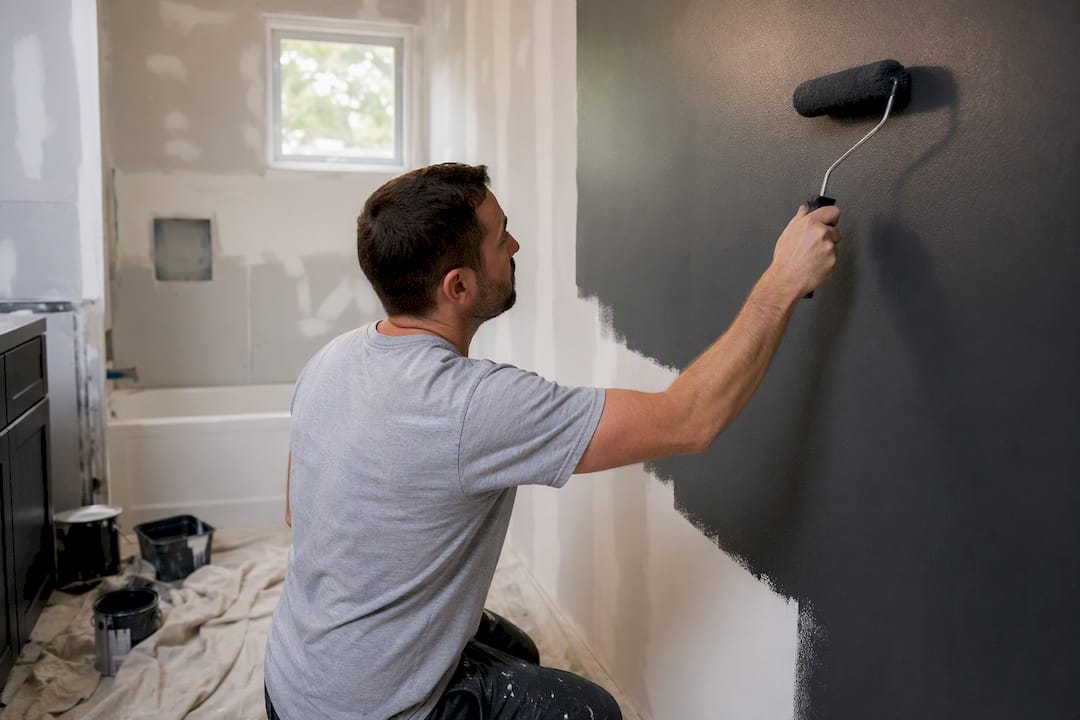
DIY work can shave real dollars off a cosmetic refresh: painting, swapping a faucet, or installing a new toilet are all within reach for a handy homeowner and can cut $1,000 to $2,000 off a project’s labour line.
Bathroom additions and full renovations are a different calculation entirely. Plumbing and electrical work in a new bathroom typically requires permitted, inspected work, and an addition often means running new supply and drainage paths through finished walls or floors, sometimes tying into the main plumbing stack. Getting that wrong doesn’t just cost money to fix. It can fail inspection, void a warranty, or create a moisture problem that surfaces months later behind a wall.
The honest comparison isn’t DIY versus professional on cost alone. It’s DIY versus professional on what happens when something goes wrong. A licensed contractor’s insurance and permit process cover that risk; a DIY project generally doesn’t, and the repair cost for a failed inspection or a leak behind new tile usually exceeds whatever was saved on labour.
What Bowmanville homeowners consistently get wrong about bathroom budgets
The conventional advice on bathroom costs treats the contingency as an afterthought, something to mention once and move past. That’s backwards.
What gets overrated is the fixture showroom trip. Homeowners spend hours agonizing over faucet finishes while the plumbing layout decision, made in the first five minutes of a contractor conversation, determines a much larger share of the final invoice. Prioritize the layout question first: what stays, what moves, what’s below grade. Everything else, tile pattern included, is a smaller lever than that one decision.
If there’s one thing worth doing differently, it’s asking for a written, itemized scope before comparing a single dollar figure between contractors. The number means nothing without knowing exactly what it buys.
Get a bathroom renovation quote in Bowmanville
LA Rocks Renovations gives Bowmanville homeowners something a lot of quote-shopping doesn’t: a contractor who already knows the local permit process, the drainage realities of Durham Region basements, and how to write a scope that doesn’t leave room for surprise change orders. Instead of piecing together separate trades for plumbing, tile, electrical, and cabinetry, you get one team managing the whole project from permit application to final walkthrough.

That matters most on the projects this article covers: additions and full renovations, where plumbing moves and structural work create the biggest cost variance between a clean quote and a messy one. LA Rocks Renovations also handles basement renovations, so if your bathroom addition is part of a larger basement finishing project, the same team can scope both together rather than coordinating two separate contractors on overlapping work.
If you’re ready to turn the ranges in this article into a real number for your bathroom, request a quote for your Bowmanville bathroom project and get a written scope you can actually compare against other bids.
Sources
Local pricing and permit context above draw on HomeStars’ Bowmanville cost guide and NerdWallet’s remodel cost analysis. For a project quote, visit LA Rocks Renovations.
- Find a bathroom renovation company in Bowmanville
- Bathroom remodel cost (NerdWallet)
- Bathroom addition cost guide (Plumbline Construction)
- Bathroom renovation ideas Bowmanville (Hayes Plumbing)