


Bowmanville Tub vs Walk-In Shower: What to Do If You Have One Bath
Dylan LarocqueRequest Your Free Estimate Today
GET A FREE ESTIMATE →If you’re renovating for a family or care about resale in a single-bathroom home, keep or install a bathtub. If daily accessibility, a modern look, or an ageing-in-place plan matters more, a walk-in shower usually wins. Most Bowmanville homes with more than one bathroom don’t need to choose at all.
TL;DR:
- Bathtubs are essential for bathing young children and can boost resale value in family homes, but may pose safety and accessibility issues for seniors or mobility-challenged individuals.
- Walk-in showers with curbless entry and hand-held wands improve daily ease of access and safety, though they often come with higher upfront costs and complex waterproofing requirements.
- Renovation costs vary from about $4,500 to over $9,500 depending on waterproofing method, surface material, drain type, and plumbing relocations, with timelines spanning from one to two weeks.
- Removing a tub in a single-bathroom home can limit future buyer interest, especially among families, while keeping a tub or converting only the primary bathroom’s fixtures benefits resale.
- Proper ventilation, high-quality waterproofing, and slip-resistant surfaces are critical for mold prevention and safety, regardless of choosing a bathtub or walk-in shower.
Table of Contents
- Bathtub vs. walk-in shower: which is better for your Bowmanville home?
- What does a bathroom renovation cost, and how long does it take?
- Does removing a tub hurt resale value in Bowmanville?
- What accessibility features matter for aging-in-place bathrooms?
- How does the choice affect your bathroom’s layout and materials?
- Which option uses less water and costs less to maintain?
- What should you check before signing a renovation quote?
- Local renovation experience: what Bowmanville homes need
- How do you prevent mold and keep either option clean?
- What safety features actually reduce falls and injuries?
- What design styles work with each fixture?
- Does your fixture choice change your ventilation needs?
- Are bathtubs or walk-in showers the greener choice?
- LA Rocks Renovations’ honest take on tubs versus showers
- Ready to plan your Bowmanville bathroom renovation?
- Sources
Bathtub vs. walk-in shower: which is better for your Bowmanville home?
Every renovation quote eventually comes down to this question, and the honest answer is that both fixtures do different jobs well. A tub sells better in family neighbourhoods. A shower serves daily life better for most adults. The right call depends on how many bathrooms your home has, who lives there now, and who might buy it later.
Bathtub pros:
- Soaking in warm water for 10 to 15 minutes offers real relaxation and muscle recovery benefits, according to the Cleveland Clinic, which also recommends keeping water below about 40°C for safety.
- Bathtubs remain necessary for bathing young children, and homes without at least one tub often see reduced interest from family buyers in suburban markets, a pattern local renovators consistently flag.
- In single-bathroom homes aimed at family buyers, a tub protects resale appeal far more than it costs to maintain.
Bathtub cons:
- Getting in and out of a tub is genuinely difficult for older adults or anyone with mobility limitations, and slip risk climbs on a wet porcelain surface.
- Tubs take up a larger footprint than a curbless shower stall, which matters in a bathroom under 40 square feet.
- Older tub installations, particularly ones from the 1980s and 1990s, sometimes hide subfloor water damage behind the surround. That’s a discovery you don’t want mid-reno.
Walk-in shower pros:
- Curbless entry, bench seating, and a handheld wand make daily bathing dramatically easier for anyone with joint pain, balance issues, or a wheelchair in the household.
- Large-format panel walls cut down grout lines, which means less scrubbing and fewer places for mildew to take hold, a trend Five Star Bath Solutions has tracked closely in recent renovation data.
- A well-designed glass shower can visually open a cramped bathroom, making the whole room feel larger even when the actual square footage hasn’t changed.
Walk-in shower cons:
- Curbless and custom builds cost more upfront than a standard tub install, mostly because of the waterproofing labour involved.
- Getting a curbless shower to drain properly without leaks demands a linear drain system and professional membrane work, not a quick tile job.
- In a single-bathroom home, removing the only tub can quietly shrink your buyer pool when it’s time to sell.
What does a bathroom renovation cost, and how long does it take?
Cost is where most homeowners get surprised, usually because online estimates ignore what waterproofing and plumbing moves actually add. Ontario data puts a standard tub install between roughly $4,500 and $9,500, while a walk-in shower typically runs a wide range from mid to high-end costs depending on finish level and whether the drain or plumbing needs relocating.
Pro Tip: Ask for a fixed-price quote that separates labour, materials, and waterproofing line items. Vague lump-sum quotes almost always hide scope gaps that surface as change orders later.
A handful of factors move those numbers more than anything else:
- Waterproofing method — a Schluter membrane system or waterproof foam board costs more than paint-on membrane but lasts decades longer.
- Surface material — large tile costs more in labour than a one-piece acrylic surround, even if the material price is similar.
- Drain type — a linear drain for a curbless shower needs more slope work than a standard centre drain.
- Plumbing relocation — moving a drain or supply lines even a few inches adds real cost once you factor in subfloor access.
- Labour availability — Durham Region tradespeople book out weeks in advance during spring and fall renovation season, which affects both price and start date.
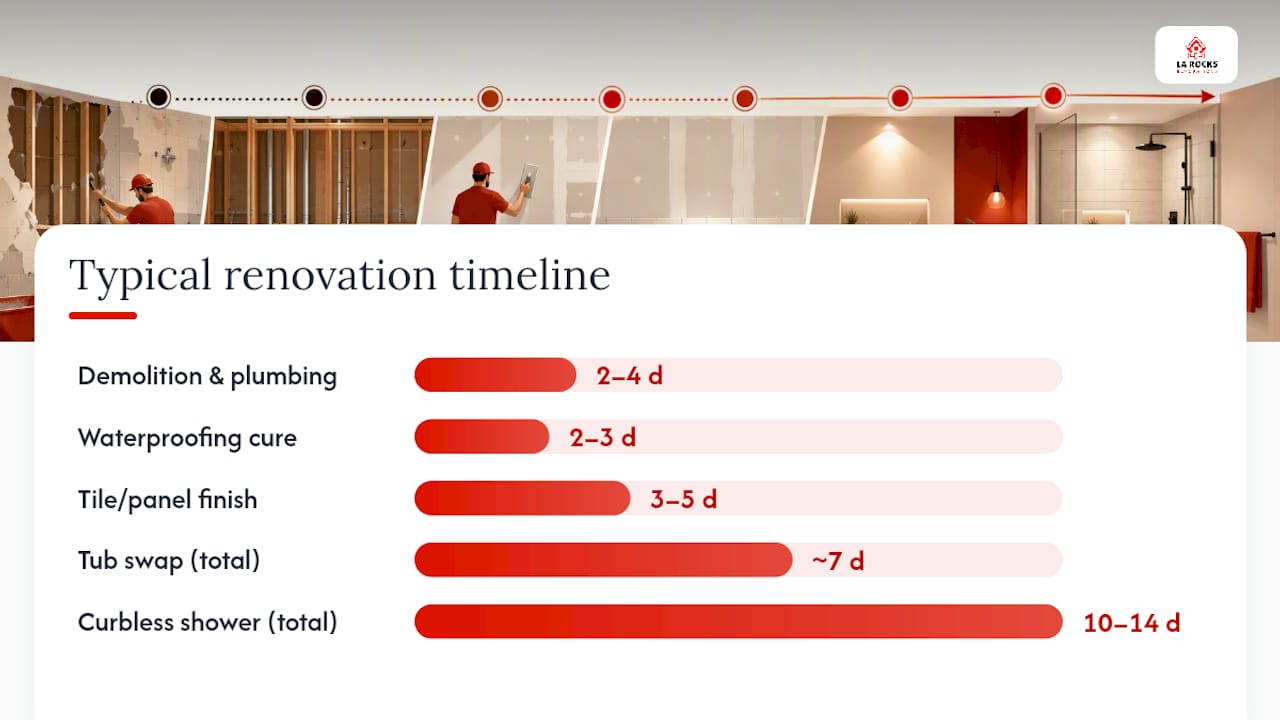
On timeline, expect demolition and rough plumbing to take two to four days, waterproofing and curing another two to three days, then tile or panel installation and finishing over three to five days. A straightforward tub swap can close out in a week; a full curbless shower conversion with tile typically runs 10 to 14 working days once permits and material lead times are factored in.
Permits matter more than most homeowners expect. Clarington and the wider Durham Region require permits for plumbing relocations, and skipping that step can complicate a future home sale inspection. HST applies to labour and materials on every renovation contract, so build that into your budget conversation from the first quote, not after signing.
Does removing a tub hurt resale value in Bowmanville?
It depends entirely on who’s likely to buy your home next. In single-family, multi-bedroom homes with one bathroom, removing the only tub tends to shrink your buyer pool, since families with young kids still search listings specifically for a bathtub. Real estate agents in family-heavy Durham Region neighbourhoods consistently flag “no tub” as a line item buyers ask about during showings.
The picture flips for downsizers, condo buyers, and anyone prioritising a modern, low-maintenance home. Ontario market data shows walk-in showers appeal strongly to accessibility-focused and downsizing buyers, who often view a curbless shower as a selling point rather than a compromise.
If your home has two or more bathrooms, this decision gets much easier. You can convert the ensuite to a walk-in shower for daily comfort while keeping a tub in the main or basement bathroom for resale coverage. That single move protects value for family buyers without sacrificing the modern upgrade you actually want to live with.
A few practical guardrails:
- Keep at least one full tub if your home has a single bathroom and sits in a family-oriented Bowmanville or Clarington subdivision.
- If converting your only tub, invest in quality tile and hardware. A cheap-looking shower can hurt value more than having no tub at all.
- In a two-bathroom-plus home, a walk-in shower in the primary ensuite paired with a tub elsewhere satisfies both resale and daily-use needs.
What accessibility features matter for aging-in-place bathrooms?
Curbless entry is the single biggest accessibility upgrade available in a bathroom renovation, and it’s not just for seniors. A zero-threshold shower removes trip hazards for anyone, including kids and guests with mobility devices. Pair that with bench seating, a handheld shower wand on a sliding bar, and properly anchored grab bars, and you’ve built a bathroom that works for a resident in their thirties and their parents visiting for the holidays.
Tubs aren’t obsolete for accessibility, though. Anyone using warm-water soaking for therapeutic reasons, arthritis relief, or muscle recovery may still prefer a tub. If mobility is the concern rather than preference, a walk-in tub with a door and built-in seat, or a transfer bench paired with a standard tub, can bridge that gap without a full shower conversion.
When you’re getting quotes, ask contractors to include these universal design items explicitly:
- Curbless or low-threshold shower entry with a properly sloped linear drain
- Grab bars anchored into wall blocking, not just drywall anchors
- A fold-down or built-in bench seat at a comfortable sitting height
- Slip-resistant flooring rated for wet areas, not standard porcelain tile
- Wide enough door clearance for a walker or wheelchair, where layout allows
Pro Tip: Check with the Municipality of Clarington or Durham Region before assuming a rebate covers accessibility renovations. Programs and eligibility change, so confirm current details directly rather than relying on what a contractor mentions from memory.
How does the choice affect your bathroom’s layout and materials?
A standard tub footprint runs roughly 60 by 30 inches, while a curbless shower can work in a space as small as 36 by 36 inches with the right drain configuration. That difference matters enormously in older Bowmanville homes built with compact bathrooms, where reclaiming even a few square feet of floor space can make the whole room feel less cramped. Reorienting a door swing or tucking a corner shower into an awkward footprint is often enough to make a walk-in conversion feasible without touching load-bearing walls, an approach several Ontario renovators use regularly on smaller lots.
Material choice drives long-term upkeep more than most homeowners expect going in:
- Acrylic surrounds cost less and have no grout lines, but they can look less premium and may show scratches over time.
- Large-format tile panels reduce grout maintenance significantly while keeping a high-end appearance, at a higher material and labour cost.
- Standard tile and grout offers the most design flexibility but demands regular resealing to prevent moisture penetration.
Waterproofing quality is where corners get cut most often, and it’s the one place you shouldn’t let a contractor cut them. A proper membrane system, whether Schluter, liquid-applied, or waterproof foam board, paired with a linear drain, is essential for curbless showers in cold, hard-water climates to avoid freeze damage and slow leaks that rot subfloor over years. Some older Bowmanville homes also need subfloor reinforcement or minor framing changes to support a heavier tile shower base, something worth confirming during the initial site visit rather than after demolition starts.
For smaller bathrooms specifically, compact fixture layouts and space-saving fittings can make a bigger practical difference than the fixture choice itself, a point covered well in Simco Direct’s guide to space-saving bathroom fittings.
Which option uses less water and costs less to maintain?
A full bathtub soak uses considerably more hot water than an average shower, and that gap shows up directly on your energy bill over a year. The U.S. Department of Energy points to shorter showers and efficient fixtures as two of the most reliable ways to cut household hot-water energy costs, and that guidance holds just as well north of the border.
Fitting a WaterSense-labelled showerhead is one of the simplest upgrades available. The EPA’s WaterSense program confirms modern low-flow showerheads maintain solid water pressure while using meaningfully less water than older fixtures, which matters if you’re paying for both water and the energy to heat it.
Maintenance differences are just as real day to day:
- Grout lines around a tiled tub surround need resealing every one to two years to prevent moisture penetration.
- Large panel walk-in showers need almost no grout maintenance, just periodic caulk replacement at seams.
- Tub caulking around the base wears faster than shower caulking, since tub water sits longer against the seal during a fill.
Over five to 10 years, expect a tiled tub surround to need more sealant and grout attention than a panel shower, though both need occasional caulk refresh regardless of material.
What should you check before signing a renovation quote?
Before calling contractors, walk through your own priorities honestly. Are you renovating to sell within two years, or to live in the home for another decade? Do you have kids who still need a tub, or aging parents who need a curbless entry? Answering that first narrows everything else.
Homeowner checklist:
- Number of bathrooms in the home and whether at least one tub should stay
- Realistic resale horizon: selling soon versus staying long-term
- Budget range, including a buffer of 10 to 15% for surprises like hidden water damage
- Available floor space and whether the door swing or plumbing needs to move
- Accessibility needs, current or anticipated, for anyone in the household
When you sit down with contractors, ask these questions directly:
- What waterproofing method will you use, and why that one for this bathroom?
- What drain type do you recommend, and how does it handle slope for a curbless design?
- Who pulls the permit, and is that cost included in the quote?
- What’s your written warranty on labour, separate from the manufacturer’s material warranty?
- What’s the realistic start-to-finish timeline, including material lead times?
- Can I see photos or visit a similar completed project?
- How do you handle unexpected subfloor damage if it’s found during demolition?
- Is the quote itemized by labour, materials, and waterproofing, or a single lump sum?
- What happens if my chosen tile or fixture is back-ordered?
- Do you carry liability insurance and WSIB coverage for the crew on-site?
Pro Tip: Treat a contractor who avoids the waterproofing question, or brushes past it quickly, as a red flag. That’s the one part of the job you can’t inspect once tile goes up.
Once you’ve got answers, schedule an in-home measurement and assessment. That’s the point where a quote stops being a guess and starts reflecting your actual bathroom.
Local renovation experience: what Bowmanville homes need
Dylan Larocque and the team at LA Rocks Renovations have walked through more Durham Region bathrooms than most homeowners see in a lifetime, and certain patterns repeat constantly. Older Bowmanville and Clarington homes frequently have hard water buildup on original fixtures and plumbing runs that weren’t sized for today’s shower systems. Both issues need addressing before new tile goes up, not after. LA Rocks Renovations builds waterproofing and plumbing assessments into every quote from the start, precisely because skipping that step is where most renovation budgets get blown later. For readers weighing a tub-to-shower conversion or exploring luxury finish options, that local, hands-on familiarity with the housing stock matters more than a generic price sheet.
How do you prevent mold and keep either option clean?
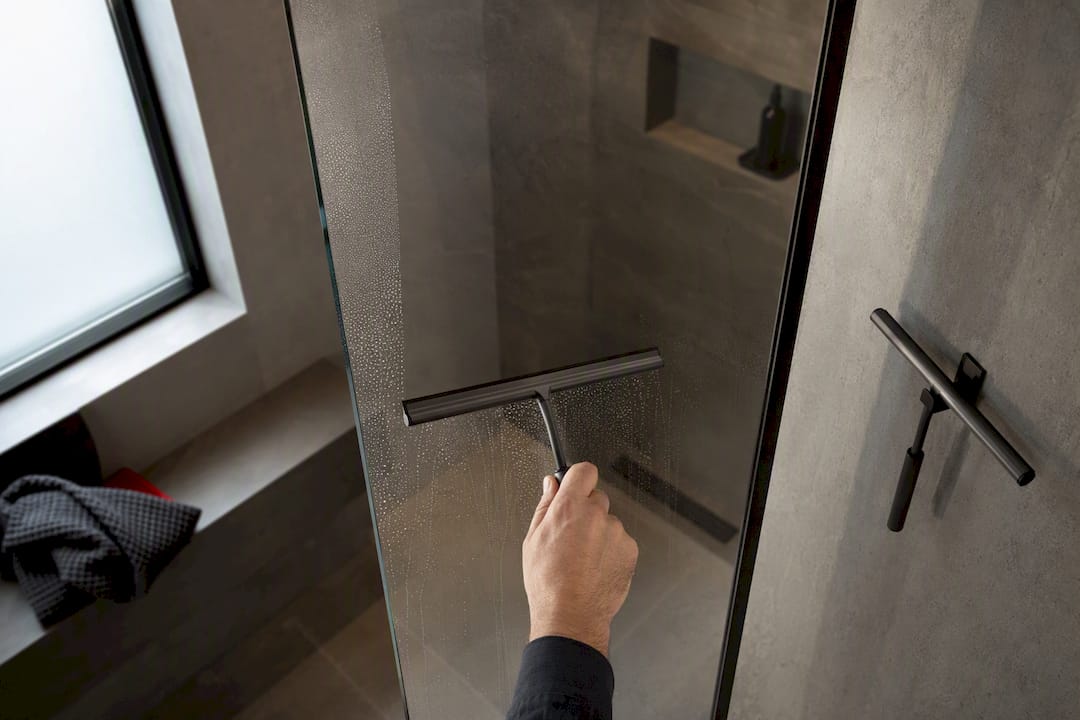
Mold prevention comes down to ventilation, sealant quality, and how quickly water actually leaves the surface after use. Tubs with tiled surrounds need grout resealed every one to two years, since porous grout is where mildew takes hold first. A daily habit of squeegeeing tile after a shower cuts standing moisture dramatically and takes about 20 seconds.
Walk-in showers with large panel walls have a real advantage here: fewer grout lines mean fewer places for mildew to establish itself. The main vulnerability shifts to caulk seams around the glass door and where panels meet the floor pan. Check those seams twice a year and re-caulk at the first sign of discolouration or gaps, since a failed seal lets water behind the wall where you can’t see it.
Both fixture types benefit from a working exhaust fan run for 20 to 30 minutes after every shower or bath, which clears humidity before it settles into paint, drywall, or grout. Curbless showers with a linear drain also need occasional drain clearing, since hair and soap residue collect there just as they do in a standard drain, sometimes faster given the shallower slope.
What safety features actually reduce falls and injuries?
Slip risk is the single biggest safety difference between these two fixtures, and it’s not close. A wet porcelain or acrylic tub floor with no texture is one of the most common fall points in any home, particularly for older adults stepping over a raised tub wall. Adding a textured non-slip mat or applying a slip-resistant coating during renovation reduces that risk meaningfully.
Walk-in showers eliminate the step-over hazard entirely with curbless entry, which is the main reason accessibility specialists recommend them for aging-in-place plans. That said, a shower floor still needs slip-resistant tile or a textured pan finish. Smooth large-format tile can be just as dangerous wet as an old tub surface if it’s the wrong finish.
Grab bars belong in both setups, not just accessibility-focused renovations. A properly anchored bar near the tub entry and inside the shower wall, mounted into blocking rather than drywall alone, costs little to add during a renovation and a great deal to retrofit safely afterward. Bench seating inside a walk-in shower gives anyone, not just someone with mobility limitations, a stable option for shaving legs or simply resting during a longer shower. Handheld shower wands on a sliding bar reduce the need to reach or twist awkwardly, another small addition with an outsized safety payoff.
What design styles work with each fixture?
Bathroom style has shifted noticeably toward clean, minimal lines, and both fixtures adapt well to that if you choose materials deliberately. A freestanding soaker tub reads as a spa-like statement piece in a larger primary ensuite, particularly paired with matte black fixtures or a wood-look vanity. In smaller family bathrooms, a simple alcove tub with a tile surround still fits traditional and transitional decors without competing for visual attention.
Walk-in showers offer more range than people expect. Large-format porcelain panels in a neutral tone create a sleek, contemporary look with almost no visible seams. For a more traditional or transitional bathroom, subway tile with a contrasting grout colour or a herringbone accent wall keeps the shower feeling warm rather than clinical. Frameless glass doors are the detail that ties either style together, since they let the tile or panel finish read as the visual focus rather than a bulky metal frame.
Whichever direction you choose, matching fixture finishes (matte black, brushed nickel, or polished chrome) across the faucet, shower head, and hardware keeps a renovated bathroom looking intentional rather than assembled from mismatched parts. That single detail is one of the most common things buyers notice in listing photos, even before they think about tub versus shower.
Does your fixture choice change your ventilation needs?
Both bathtubs and showers add humidity to a bathroom, but the volume and duration differ enough to matter for your ventilation setup. A full tub fill releases steady moisture for the duration of the bath, while a shower generates more concentrated humidity in a shorter burst, especially with a rainfall or multi-jet system that increases water surface area.
A properly sized exhaust fan matters more than most homeowners budget for. Undersized fans, common in older Durham Region homes built before current ventilation standards, struggle to clear humidity fast enough after a hot shower, which lets moisture settle into paint and grout over repeated cycles. If you’re converting to a larger walk-in shower with multiple shower heads or a steam feature, upgrading the exhaust fan capacity during the same renovation avoids a callback down the line.
Humidity control also affects nearby rooms, particularly if your bathroom shares a wall with a closet or bedroom. Persistent humidity without adequate extraction can lead to condensation on cooler surfaces nearby, which is a slower-building problem than a visible leak but just as damaging over years. Whichever fixture you choose, pairing it with a fan rated for your bathroom’s square footage, and running it long enough after each use, does more for long-term air quality than any fixture decision on its own.
Are bathtubs or walk-in showers the greener choice?
Material choice affects environmental impact more than the fixture type itself. Acrylic tub and shower surrounds are petroleum-based products, though many now use recycled content and last decades without needing replacement. Porcelain and ceramic tile, by contrast, use more energy to manufacture but stand up to reuse and have a very long service life once properly installed, which offsets their production footprint over time.
Water use is where the bigger environmental gap shows up, and it favours showers when used efficiently. A shorter shower with a WaterSense-rated fixture uses meaningfully less water than a full tub fill, which reduces both water consumption and the energy needed to heat it. That said, an efficient shower used for 20 minutes daily can offset those savings quickly, so the real environmental win comes from fixture efficiency paired with mindful use, not the fixture type alone.
For homeowners prioritizing lower environmental impact during a renovation, look for tile and surround materials with recycled content, choose WaterSense-certified fixtures, and consider a tankless or high-efficiency water heater if you’re replacing that system at the same time. Waterproofing membrane quality also plays an indirect environmental role: a properly sealed shower avoids the water damage and material waste that comes with premature repairs and demolition down the line.
LA Rocks Renovations’ honest take on tubs versus showers
Most Bowmanville homes we work in have one bathroom, and in those cases, we default to keeping a tub unless the homeowner has a firm accessibility need. In multi-bath homes, we usually steer clients toward a walk-in shower for the primary ensuite, especially when modernisation or ageing-in-place is the goal. We push hard on proper membrane waterproofing and linear drains regardless of budget, because that’s the one shortcut that costs far more to fix later than to do right the first time.
— Dylan Larocque
Ready to plan your Bowmanville bathroom renovation?
LA Rocks Renovations gives Bowmanville and Durham Region homeowners a single, accountable contractor for the entire job, from tub-to-shower conversions to full curbless walk-in installs, rather than juggling separate tile setters, plumbers, and waterproofing specialists on your own.

Every written quote from LA Rocks Renovations breaks out labour, materials, and waterproofing as separate line items, so you know exactly what you’re paying for before any demolition starts. An on-site assessment comes first: measuring the space, checking subfloor condition, and confirming your accessibility or resale priorities before a single number gets finalized. If a bathroom renovation is part of a larger project, LA Rocks Renovations also handles flooring installation throughout the rest of the home, including waterproof vinyl plank options that pair well with a newly renovated wet room. Ready to see what your bathroom would cost and how long it would take? Get a free quote from LA Rocks Renovations and book your in-home assessment today.
Sources
Cost and resale figures cited throughout this article come from Ontario-focused renovation data published by GetAHomePro, which breaks down walk-in shower and tub installation pricing by finish level. Water-use and efficiency guidance draws on the EPA’s WaterSense program and the U.S. Department of Energy’s hot-water savings guidance, both useful references for anyone comparing long-term operating costs. Health-related claims about soaking benefits reference the Cleveland Clinic’s guidance on bathing. Design and buyer-preference observations draw on renovation industry coverage from Odin Agnuk Ltd. and Five Star Bath Solutions.
- EPA WaterSense: Showerheads
- Cleveland Clinic: Taking the plunge: 5 reasons baths are good for you
- Walk-In Shower vs. Bathtub in Ontario: Renovation Cost & Resale Value | GetAHomePro